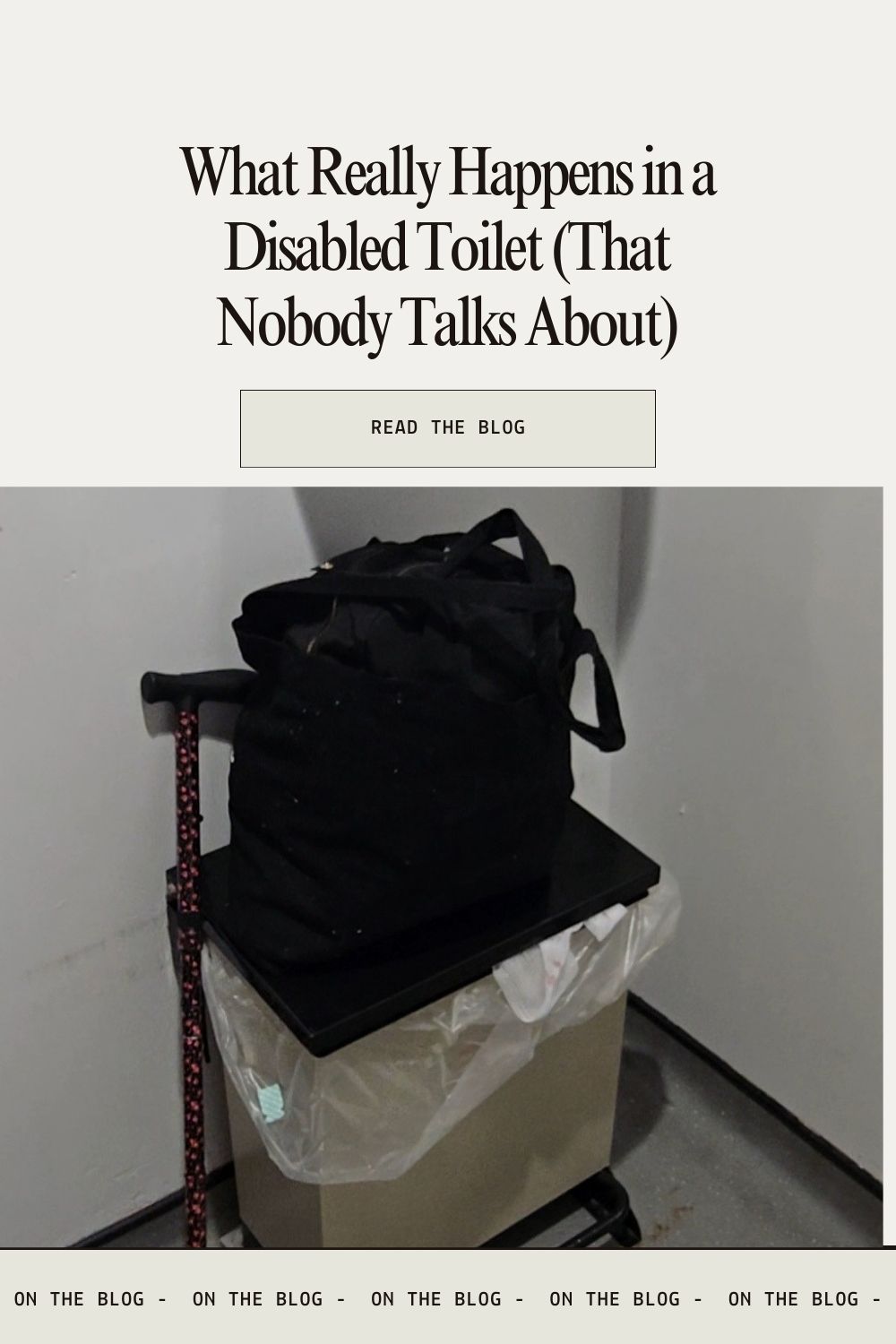
by Angela Pain Alchemist
People think a disabled toilet is just a bigger bathroom with a rail.
No.
It’s a survival room.
For people like me — chronic pain, endometriosis, bowel disease, pelvic trauma, neurodivergence, sensory overwhelm — this is the only public space where my body can fall apart safely, quietly, and without witnesses.
So here’s what actually happens behind that door.

⭐ 1. Sometimes I have to partially undress just to regulate my body.
I’m usually:
- half undressed
- sweating
- shaking
- overheating
- trying not to faint
- nearly naked except for my shoes
Pain makes clothes feel like fire.
A disabled toilet gives me space to strip down safely without collapsing.
⭐ 2. My bag becomes a medical station.
I open the baby-change table just to rest it.
Inside?
Wipes, creams, heat packs, water, pain meds, pads, tissues, sensory items, emergency layers — everything needed to keep me functioning.
Surviving takes equipment.
Surviving takes time.

⭐ 3. The sink is a medical device.
I use it to:
- cool my face and neck
- wet toilet paper so it doesn’t tear my skin
- clean blood
- regulate sensory overload
- keep myself conscious
The sink is not optional.
It is essential.
⭐ 4. When I walk out looking “fine,” I still get judged.
People assume:
“Too young.”
“Too pretty.”
“Too normal.”
“She didn’t need that toilet.”
But if I walk out pale and sweating?
“She must be on drugs.”
I am.
They’re prescribed.
Speak to my doctor if you’d like references.

⭐ 5. Disabled toilets aren’t luxuries — they’re lifelines.
Inside that room I can:
- undress safely
- treat bleeding
- calm nausea
- avoid fainting
- regulate temperature
- breathe
- get stable enough to walk out
It’s the only place where my body and dignity can coexist.
If that makes you uncomfortable, imagine living like this every day.


Leave a Reply